

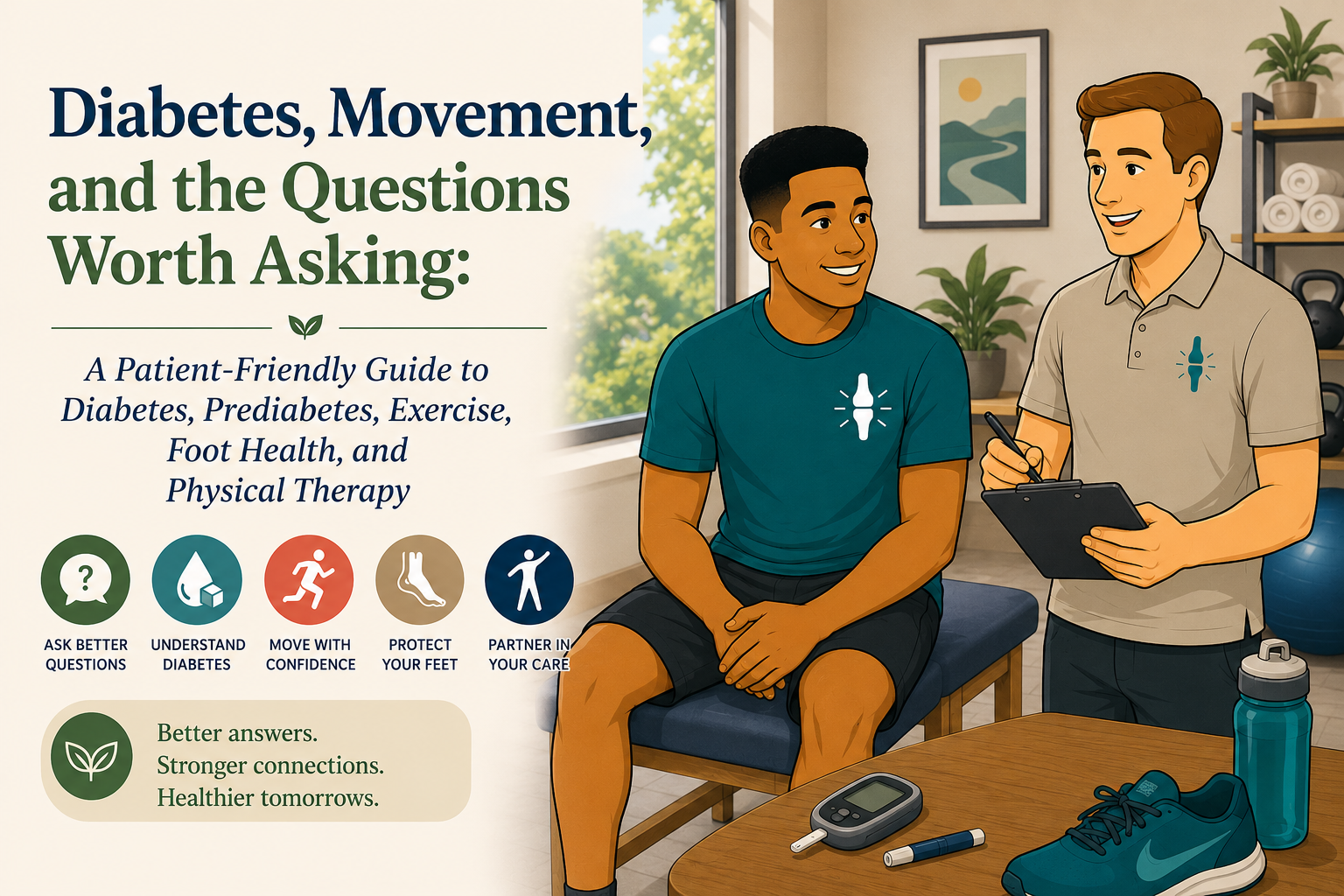
A quick note before we begin
This article is for education only. It is not a diagnosis, medical treatment plan, medication recommendation, or replacement for care from your physician, endocrinologist, diabetes educator, podiatrist, registered dietitian, wound care specialist, or physical therapist.
Physical therapists can help with movement, strength, balance, walking, safe exercise, foot protection, wound-related mobility concerns, and knowing when another provider should be involved. Physical therapists do not manage diabetes medications unless they are separately licensed and authorized to do so - in most cases, these privileges are reserved primarily for those in the military. Your care should always follow your state laws, medical plan, and the guidance of your healthcare team.
Thank you for your time - now, without further ado, please enjoy!
✨ Too Long Didn’t Read (TL;DR) / Summary
Diabetes is not just about “blood sugar.” It can affect your energy, strength, balance, walking, healing, nerves, blood vessels, eyes, kidneys, feet, confidence, and daily life. That may sound like a lot, but there is good news: there are many practical steps you can take, and you do not have to figure them out alone.
In the United States, diabetes and prediabetes are very common. Current CDC data estimate that 40.1 million people in the U.S. have diabetes, and 115.2 million U.S. adults have prediabetes.
There are different types of diabetes.
Type 1 diabetes is usually related to the body not making enough insulin because of autoimmune destruction of insulin-producing cells.
Type 2 diabetes is often related to insulin resistance, meaning the body has a harder time using insulin well.
Prediabetes means blood sugar levels are trending higher than normal but not yet in the diabetes range.
Exercise is one of the most helpful tools for managing diabetes risk and supporting diabetes care. Movement can help your muscles use glucose, improve insulin sensitivity, support heart health, improve strength, help with balance, and make everyday activities easier.
🧾 General Information
Let’s make diabetes less mysterious
A lot of people hear the word “diabetes” and immediately think of sugar, insulin, weight, diet, or needles.
Those things may be part of the story, but they are not the whole story.
Diabetes is a condition where blood glucose, (often called blood sugar), is too high because the body either does not make enough insulin, does not use insulin well, or both.
Insulin is a hormone that helps move glucose from the blood into the cells, where it can be used for energy.
When glucose stays too high over time, it can affect many parts of the body. Diabetes-related complications may involve the heart, blood vessels, nerves, kidneys, eyes, skin, and feet.
That is why diabetes care is not only about one lab number. It is about protecting your ability to live, move, walk, heal, work, play, and participate in the things that matter to you.
Type 1 diabetes, type 2 diabetes, and prediabetes
Type 1 diabetes
Type 1 diabetes is usually caused by an autoimmune process that damages the beta cells in the pancreas. These cells make insulin. When the body cannot make enough insulin, insulin treatment is usually needed.
People with type 1 diabetes can absolutely exercise, play sports, lift weights, walk, hike, dance, and live active lives. But exercise planning often needs extra attention because activity can affect blood glucose before, during, and after movement.
Good questions for your healthcare team include:
Should I check my glucose before exercise?
What glucose range is safe for me before activity?
Should I carry fast-acting carbohydrates? If so, what are some recommendations?
What symptoms of low blood sugar should I watch for?
How does exercise affect my insulin plan?
Should I use a continuous glucose monitor?
Are there certain activities I should approach more carefully?
Type 2 diabetes
Type 2 diabetes is the most common form of diabetes. It often starts with insulin resistance, where the body has a harder time using insulin effectively. Over time, the pancreas may not be able to make enough insulin to keep blood sugar in a healthy range.
Type 2 diabetes is influenced by many things, including family history, age, physical activity, body composition, sleep, stress, nutrition, medications, access to healthcare, and other health conditions.
This matters because diabetes can carry some unfairly negative social baggage with it. Type II diabetes is not a simple “willpower problem.” It is a health condition that deserves information, support, and a real plan.
Prediabetes
Prediabetes means your blood sugar is higher than normal but not high enough to be diagnosed as diabetes.
Think of prediabetes as a warning light on the dashboard. It does not mean the engine has failed. It means it is time to pay attention.
For many people, lifestyle changes such as physical activity, nutrition changes, weight management when appropriate, sleep improvement, and medical follow-up can delay or reduce the risk of developing type 2 diabetes.
A helpful question to ask your physician is:
“Based on my labs and risk factors, what is my personal risk of developing type 2 diabetes, and what are one or two changes that would help me most?”
Diabetes testing numbers you may hear at the doctor’s office
Your doctor may order blood tests to screen for diabetes or prediabetes. The most common numbers patients hear are A1C, fasting plasma glucose, and the 2-hour oral glucose tolerance test.
A1C
A1C gives an estimate of average blood glucose over roughly the past 2 to 3 months.
Normal: below 5.7%
Prediabetes: 5.7%–6.4%
Diabetes: 6.5% or higher
Fasting plasma glucose
This test checks blood glucose after fasting.
Normal: below 100 mg/dL
Prediabetes: 100–125 mg/dL
Diabetes: 126 mg/dL or higher
2-hour oral glucose tolerance test
This test checks how your body responds after drinking a glucose-containing drink.
Normal: below 140 mg/dL
Prediabetes: 140–199 mg/dL
Diabetes: 200 mg/dL or higher
One important note: if you do not have obvious symptoms or a diabetes emergency, diabetes diagnosis usually requires multiple tests to officially be given a diagnosis.
Good questions to ask your doctor:
Which diabetes test did I have?
What was my result?
Do I need repeat testing?
Am I in the normal, prediabetes, or diabetes range?
How often should I be tested?
Should I be screened because of family history, weight changes, pregnancy history, medications, or other risk factors?
What is my A1C goal, if I already have diabetes?
Diabetes risk: what raises the chances?
Some diabetes risk factors are not things you can change. Others are.
Risk factors for type 2 diabetes can include age, family history, race or ethnicity, history of gestational diabetes, higher body weight, physical inactivity, high blood pressure, abnormal cholesterol, smoking, sleep problems, stress, depression, and other social or health factors.
If you know your risk, you can ask better questions and make earlier changes.
Good questions to ask your physician:
Should I be screened for prediabetes or diabetes?
How often should I have my A1C or fasting glucose checked?
Do any of my medications affect blood sugar?
Does my family history change my screening plan?
Should I see a registered dietitian or diabetes educator?
What changes are most realistic for me right now?
Treatment for diabetes: the big picture
Diabetes treatment is usually a team effort. Depending on your situation, your team may include a primary care physician, endocrinologist, nurse practitioner, physician assistant, registered dietitian, diabetes care and education specialist, pharmacist, podiatrist, eye doctor, dentist, vascular specialist, wound care specialist, mental health provider, and physical therapist.
Treatment may include:
Blood glucose monitoring
Medication or insulin when prescribed
Nutrition support
Physical activity
Weight management when appropriate
Blood pressure management
Cholesterol management
Smoking cessation support
Foot care
Eye exams
Kidney monitoring
Dental care
Stress and sleep support
Education and follow-up
The goal is not perfection. The goal is protection, progress, and a plan you can actually live with.
Why exercise helps diabetes
Your muscles are not just for lifting groceries and climbing stairs. They also help manage glucose.
When you move, your muscles use glucose for energy. Over time, regular activity can improve insulin sensitivity, support blood sugar management, improve cardiovascular health, support healthy blood pressure and cholesterol, improve strength, and make daily movement easier.
Exercise can be especially helpful for people with type 2 diabetes and prediabetes, but people with type 1 diabetes can benefit from regular physical activity too.
The key is safety and personalization.
A great exercise plan should fit your body, your medical history, your current fitness level, your schedule, your feet, your balance, your medications, and your goals.
What kind of exercise is best?
There is no single perfect exercise for everyone with diabetes.
(We’ll say it again: THERE IS NO SINGLE PERFECT EXERCISE FOR EVERYONE WITH DIABETES.)
This is a huge deal because it means YOUR plan can be personalized and tailored to YOU! What you like to do, what you don’t like to do, how much time you have, work/life balance… All of these should be incorporated into your personalized plan.
A strong plan often includes several types of movement.
Aerobic exercise
Aerobic exercise is movement that gets your heart and lungs working. Examples include:
Walking
Cycling
Swimming
Water aerobics
Dancing
Hiking
Seated stepping
Elliptical training
Upper-body cycling
Group fitness classes
Walking is popular because it is simple and low-cost. But walking is not the best starting point for everyone. If you have a foot wound, severe foot numbness, balance problems, joint pain, or peripheral artery disease, you may need a modified plan.
Strength training
Strength training helps build and maintain muscle. Examples include:
Sit-to-stands
Step-ups
Wall push-ups
Resistance bands
Weight machines
Free weights
Bodyweight exercises
Carrying light loads
Muscle matters. Stronger muscles help with glucose use, balance, walking, stairs, getting up from chairs, and staying independent.
Balance training
Balance can be affected by neuropathy, weakness, vision changes, medications, and reduced sensation in the feet. Balance training may help reduce fall risk and improve confidence.
This may include:
Standing balance drills
Gait training
Strengthening
Assistive device training
Footwear education
Home safety changes
Practice with stairs, curbs, and uneven surfaces
Flexibility and mobility
Stretching and mobility work can help with stiffness, comfort, and movement quality. It should not replace aerobic or strength training, but it can be a helpful part of the plan.
Less sitting
You do not always need a full workout to make a useful change. Short movement breaks matter, especially if you are starting from a low activity level.
A simple starting idea:
Stand up, walk around, or do gentle movement for a few minutes after meals (as long as you are safe to do so).
Small wins count.
How much exercise should you do?
This depends on your health, your medications, your fitness level, your symptoms, and your goals.
Many diabetes guidelines encourage regular physical activity and reduced sedentary time, with exercise individualized to the person. For many adults, a common long-term goal is at least 150 minutes per week of moderate-intensity aerobic activity, along with resistance training on 2 or more days per week, if safe and appropriate.
But please hear this clearly: If you are currently doing very little, you do not need to jump straight to 150 minutes.
You can start smaller.
Try asking:
What can I do safely this week?
Can I walk for 5 minutes?
Can I do 5 sit-to-stands?
Can I move after one meal each day?
Can I add one strength exercise?
Can I repeat this without feeling wiped out?
The first goal is to begin.
What if exercise feels scary?
That fear makes sense and, if this is you, you are 100% not alone.
Exercise can feel intimidating if you have had low blood sugar, foot wounds, heart concerns, pain, shortness of breath, dizziness, falls, neuropathy, or confusing advice from different providers.
You should not be brushed off with, “Just move more.”
There is a start point for everyone. If exercise intimidates you, you deserve help building a safe plan.
Good questions for your physician:
Are there any activities I should avoid right now?
Do I need a stress test or heart evaluation before increasing exercise?
Should I check my blood glucose before, during, or after exercise?
What symptoms mean I should stop exercising?
Do my medications increase my risk of low blood sugar?
Should I carry glucose tablets or a snack?
Is it safe for me to exercise if my blood sugar is high?
Do I need a referral to physical therapy?
Good questions for your physical therapist:
What exercises are safe for my current fitness level?
How should I progress without doing too much too soon?
How can I exercise with knee, hip, back, or foot pain?
Can you check my balance and walking?
Can you look at how I load my feet?
What should I do if I have numbness or tingling?
How can I safely return to walking after a foot wound?
What signs mean I should contact my doctor?
Foot health: why your feet deserve attention
Diabetes can affect the nerves and blood vessels in the feet. This may lead to numbness, tingling, burning, weakness, poor circulation, dry skin, deformity, wounds, or slower healing.
Sometimes a person with diabetes may step on something, develop a blister, or get irritation from a shoe and not feel it right away. That small spot can become a bigger problem if it is not caught early.
This is why foot checks matter.
A simple daily foot check
Look at:
The tops and bottoms of both feet
Between the toes
Heels
Toenails
Areas where shoes rub
Any callus, blister, cut, redness, swelling, drainage, odor, or color change
If you cannot see the bottom of your feet, use a mirror or ask someone you trust to help.
Call a healthcare provider if you notice:
A new wound
Drainage
Redness that spreads
Warmth
Swelling
Bad odor
Fever
Black or blue skin changes
New or worsening pain
A blister or callus that is changing
A wound that is not healing
Do not “wait and see” with a diabetic foot wound.
Early care can protect your foot, your mobility, and your quality of life.
What is neuropathy?
Diabetic peripheral neuropathy is nerve damage that often affects the feet and legs. It may cause numbness, tingling, burning, sharp pain, weakness, or reduced ability to feel pressure and injury.
Neuropathy can increase the risk of falls, wounds, and foot injuries.
A physical therapist may help by checking balance, walking, strength, foot loading, footwear, and safety strategies. A physician or specialist may help with medical evaluation and medication options for neuropathic symptoms.
Good questions to ask:
Do I have signs of neuropathy?
Should my feet be tested for protective sensation?
How often should my feet be checked?
What shoes are best for me?
Should I see a podiatrist?
What should I do if numbness is getting worse?
Is my balance affected?
What is peripheral artery disease?
Peripheral artery disease (often labeled “PAD”) happens when narrowed blood vessels reduce blood flow to the legs or feet. People with diabetes have a higher risk of PAD.
PAD may cause leg pain, aching, cramping, or fatigue during walking that improves with rest. This is called intermittent claudication. Some people have PAD without obvious symptoms.
PAD matters because circulation is important for walking, healing, and foot health.
Good questions to ask your provider:
Could my leg symptoms be related to circulation?
Should I have my pulses checked?
Do I need an ankle-brachial index or other vascular testing?
Is supervised exercise therapy appropriate for me?
Should I see a vascular specialist?
Are my cholesterol, blood pressure, and smoking risks being addressed?
For some people with PAD and walking-related leg pain, supervised exercise therapy can improve walking distance, walking tolerance, and quality of life.
Diabetic foot ulcers: after a wound closes, the story is not over
A diabetic foot ulcer is an open sore or wound, often on the bottom of the foot. These wounds need medical care.
If you have an active wound, your care may involve offloading, wound care, infection control, circulation assessment, footwear changes, and careful activity planning.
But here is something many people do not hear enough:
A closed wound still needs respect.
When a wound closes, the skin may not be ready for a sudden return to long walks, full work shifts, or old shoes. The tissue needs time to build tolerance again.
A physical therapist can help with:
Gradual return to walking
Safe strengthening
Assistive device use
Balance training
Footwear and loading education
Step-count progression
Monitoring skin response
Coordinating with your wound care or medical team
Diabetes and falls
Diabetes can increase fall risk through neuropathy, vision changes, weakness, dizziness, blood sugar changes, medication effects, and balance problems.
You may benefit from a balance and fall-risk assessment if you:
Feel unsteady
Have numb feet
Have fallen recently
Avoid stairs or curbs
Hold walls or furniture when walking
Have trouble walking in the dark
Have vision changes
Feel dizzy when standing
Have weakness or fatigue
Physical therapy can help you improve strength, balance, confidence, walking safety, and home strategies.
Diabetes medications and exercise
Exercise can affect blood glucose. That is usually one reason movement is helpful, but it also means you need to understand your personal response.
This is especially important if you take insulin or medications that may increase the risk of low blood sugar. Some newer diabetes or weight-related medications may also affect appetite, hydration, nausea, fatigue, and exercise tolerance.
In most cases, physical therapists do not adjust your diabetes medication. But they can help you notice patterns during activity and encourage communication with your prescribing provider.
Ask your physician or pharmacist:
Can my medication cause low blood sugar?
Should I check glucose before exercise?
Should I carry glucose tablets?
What should I do if I feel shaky, sweaty, confused, weak, or lightheaded?
What should I do if my glucose is high before exercise?
Could my medication be affecting my energy, hydration, nausea, or dizziness?
Are there signs that mean I should stop activity and call someone?
When to contact a doctor or another healthcare provider
Please seek medical care if you have symptoms that feel urgent, severe, new, or concerning.
Contact a healthcare provider promptly for:
New foot wound, blister, drainage, spreading redness, warmth, odor, or swelling
Wound that is not healing
Fever with a foot or skin problem
New or worsening leg pain with walking
Foot or leg pain at rest
Sudden color or temperature change in the foot
New numbness, weakness, or loss of balance
Repeated low blood sugar episodes
Very high blood sugar readings, especially with symptoms
Increased thirst, frequent urination, unexplained weight loss, or blurred vision
Chest pain, fainting, severe shortness of breath, or stroke-like symptoms
Dizziness or symptoms that make exercise unsafe
Confusion, vomiting, fruity-smelling breath, or concern for diabetic emergency
If symptoms feel like an emergency, call emergency services immediately.
💙 For Patients
What should I talk to my doctor about?
Going to the doctor can feel rushed. It helps to bring questions.
You do not need to ask every question below. Pick the ones that fit your situation.
If you are worried about diabetes risk
Ask:
Should I be screened for prediabetes or diabetes?
What tests should I have: A1C, fasting glucose, or oral glucose tolerance test?
What do my numbers mean?
How often should I be retested?
Does my family history increase my risk?
Do pregnancy, gestational diabetes, medications, weight changes, sleep, or blood pressure affect my risk?
What are the first two changes you recommend for me?
Should I see a registered dietitian or diabetes educator?
Would a diabetes prevention program be appropriate?
If you have prediabetes
Ask:
What is my A1C?
What is my risk of developing type 2 diabetes?
What is the most realistic prevention plan for me?
How much physical activity should I aim for?
Is weight loss recommended for me, and if yes, what is a safe goal?
Should I monitor blood glucose at home?
How often should we recheck my labs?
Are there medications that might help prevent type 2 diabetes in my case?
Can I be referred to physical therapy if pain, weakness, or balance problems make exercise hard?
If you have type 1 diabetes
Ask:
What glucose range is safest before exercise?
How should I prevent exercise-related low blood sugar?
Should I adjust insulin around activity, and who will teach me how?
Should I carry fast-acting carbohydrates?
What should I do if glucose drops during exercise?
What should I do if glucose is high before activity?
How does strength training affect my glucose compared with walking or cardio?
Can I exercise at night?
What should my physical therapist know about my diabetes plan?
If you have type 2 diabetes
Ask:
What is my current A1C goal?
What are my blood pressure and cholesterol goals?
How do my medications work?
Can my medication cause low blood sugar?
What type of exercise is safest for me?
Do I need medical clearance before increasing activity?
Should I see a physical therapist to build a safe exercise plan?
Should my feet, eyes, kidneys, and heart be checked?
What should I do if I feel dizzy, shaky, unusually tired, or short of breath during activity?
If you have foot numbness, tingling, or burning
Ask:
Do I have diabetic neuropathy?
Can you check my protective sensation?
Should I see a podiatrist?
What kind of shoes should I wear?
Should I avoid walking barefoot?
How often should I check my feet?
What symptoms mean I should call right away?
Can physical therapy help with balance, walking, and fall prevention?
If you have a wound or had a diabetic foot ulcer
Ask:
Is the wound fully healed?
Do I need offloading?
What shoes or inserts should I use?
How much walking is safe right now?
How should I increase steps or standing time?
Should I see wound care, podiatry, vascular, or physical therapy?
What signs mean the wound is coming back?
How often should my skin be checked?
If you have leg pain when walking
Ask:
Could this be peripheral artery disease?
Should my circulation be tested?
Is supervised exercise therapy appropriate?
Should I see a vascular specialist?
Is it safe for me to walk into mild or moderate symptoms?
What symptoms mean I should stop?
Are there non-walking exercise options if my feet hurt or I have wounds?
What should I talk to my physical therapist about?
Physical therapy can be very helpful if diabetes, prediabetes, pain, weakness, balance problems, foot concerns, or fear are making exercise hard.
Ask your physical therapist:
Can you help me build a safe exercise plan?
Can you assess my balance and walking?
Can you help me exercise with arthritis, back pain, knee pain, or foot pain?
Can you look at how I load my feet when I walk?
Can you help me return to activity after a foot wound?
What should I monitor after exercise?
How do I know if I am doing too much?
What exercises can I do at home?
What should I discuss with my physician before progressing?
What should I bring to an appointment?
Bring:
Medication list
Recent A1C or glucose results, if available
Blood glucose monitor or continuous glucose monitor information, if you use one
Shoes you wear most often
Orthotics or inserts, if you use them
List of symptoms
History of wounds, falls, or foot problems
Your top 2 or 3 goals
Questions written down
Your goal does not have to sound medical.
It can be:
“I want to walk my dog again.”
“I want to play with my grandkids.”
“I want to go up stairs without fear.”
“I want to lower my risk.”
“I want to stop feeling confused about what to do.”
“I want to exercise without hurting my feet.”
Those are excellent goals.
A simple starter plan to discuss with your healthcare team
Do not start a new exercise plan if your provider has told you not to exercise or if you have active medical concerns that need evaluation first.
If you have been cleared for activity, you might ask your doctor or physical therapist whether something like this is safe for you:
Week 1: Start tiny
Walk or move for 5–10 minutes, 3–5 days this week
Add 1 simple strength exercise, such as sit-to-stands
Check your feet at least 1-3 times per week
Notice how you feel before, during, and after activity
Week 2: Repeat and build
Add 2–5 minutes to one or two walks
Add a second strength exercise
Practice balance near a stable surface if safe
Keep checking your skin and symptoms
Week 3 and beyond: Progress slowly
Build toward more total weekly movement
Add resistance gradually
Reduce long sitting when possible
Ask for help if pain, dizziness, foot changes, or glucose issues show up
The best plan is not the hardest plan.
The best plan is the one you can repeat safely.
What if I feel embarrassed?
Many people with diabetes or prediabetes feel guilt, shame, frustration, or fear. Some avoid appointments because they are worried they will be judged.
You deserve better than shame-based healthcare.
You deserve clear information, realistic steps, and a team that treats you like a person.
A helpful sentence to use with your provider:
“I want to work on this, but I feel overwhelmed. Can we focus on the next realistic step?”
That is not failure.
That is a smart place to begin.
Key Takeaways
Diabetes is more than blood sugar. It can affect energy, strength, balance, sensation, circulation, wound healing, foot health, and everyday movement.
Prediabetes is a warning light, not a failure. Early testing, physical activity, nutrition support, and medical follow-up can help lower the risk of developing type 2 diabetes.
Exercise is powerful, but it should be personalized. The best plan considers your medications, glucose response, pain, balance, feet, fitness level, and real-life routine.
Foot health matters. People with diabetes should check their feet regularly and seek care quickly for wounds, redness, drainage, swelling, numbness, or color changes.
You do not have to manage diabetes alone. Physicians, physical therapists, dietitians, diabetes educators, podiatrists, and other providers can help you build a safer, more realistic plan.
📂 Supplemental Information / Citations
Centers for Disease Control and Prevention. National Diabetes Statistics Report. CDC. Updated January 21, 2026. Accessed July 3, 2026.
American Diabetes Association Professional Practice Committee for Diabetes. 2. Diagnosis and classification of diabetes: Standards of Care in Diabetes—2026. Diabetes Care. 2026;49(suppl 1). doi:10.2337/dc26-S002
Deshpande AD, Harris-Hayes M, Schootman M. Epidemiology of diabetes and diabetes-related complications. Phys Ther. 2008;88(11):1254-1264. doi:10.2522/ptj.20080020
American Diabetes Association Professional Practice Committee for Diabetes. 3. Prevention or delay of diabetes and associated comorbidities: Standards of Care in Diabetes—2026. Diabetes Care. 2026;49(suppl 1). doi:10.2337/dc26-S003
American Diabetes Association Professional Practice Committee for Diabetes. 5. Facilitating positive health behaviors and well-being to improve health outcomes: Standards of Care in Diabetes—2026. Diabetes Care. 2026;49(suppl 1). doi:10.2337/dc26-S005
Balducci S, Sacchetti M, Haxhi J, et al. Physical exercise as therapy for type 2 diabetes mellitus. Diabetes Metab Res Rev. 2014;30(suppl 1):13-23. doi:10.1002/dmrr.2514
Colberg SR, Sigal RJ, Yardley JE, et al. Physical activity/exercise and diabetes: a position statement of the American Diabetes Association. Diabetes Care. 2016;39(11):2065-2079. doi:10.2337/dc16-1728
Woelfel SL, Wendland DM. The role of physical therapy in managing peripheral artery disease and diabetes. Semin Vasc Surg. 2025;38(1):101-109. doi:10.1053/j.semvascsurg.2025.01.006
Wendland DM, Altenburger EA, Swen SB, Haan JD. Diabetic foot ulcer beyond wound closure: clinical practice guideline. Phys Ther. 2025;105(1). doi:10.1093/ptj/pzae171
American Physical Therapy Association. Scope of Practice. APTA. Accessed July 3, 2026.
American Physical Therapy Association. Patient Screenings. APTA. Accessed July 3, 2026.
American Physical Therapy Association. Documentation: Initial Examination and Evaluation. APTA. Accessed July 3, 2026.
American Physical Therapy Association. Role of the physical therapist and APTA in diet and nutrition. APTA Policies & Bylaws. Published September 20, 2019. Accessed July 3, 2026.
Freire LB, Brasil-Neto JP, da Silva ML, et al. Risk factors for falls in older adults with diabetes mellitus: systematic review and meta-analysis. BMC Geriatr. 2024;24(1):201. doi:10.1186/s12877-024-04668-0
Mulcahy J, DeLaRosby A, Norwood T. Transforming care: implications of glucagon-like peptide-1 receptor agonists on physical therapist practice. Phys Ther. 2025;105(6). doi:10.1093/ptj/pzaf061
This content drafted, researched, edited, and generated by:
McKinley Pollock, PT, DPT
McKinley Pollock, PT, DPT, OCS, CSCS is a physical therapist with a background in orthopedics and sports rehabilitation. Dr. Pollock earned his doctorate of physical therapy from Campbell University in 2021, is a board-certified orthopedic clinical specialist (OCS), and certified strength and conditioning specialist (CSCS). Dr. Pollock enjoys combining lessons learned from his DPT training and research, translating these into clinical practice. His passions include promoting relationships between patients & clinicians to promote clinical effectiveness, satisfaction, and efficiency, the implementation of primary preventative medicine into clinical practice, and leadership and education development.
© 2026 The Joint Connection Company. All rights reserved.
The content on this website, including all text, graphics, and materials, is the exclusive property of The Joint Connection Company and is protected by applicable copyright and intellectual property laws. No part of this site may be reproduced, distributed, or used without prior written permission.