

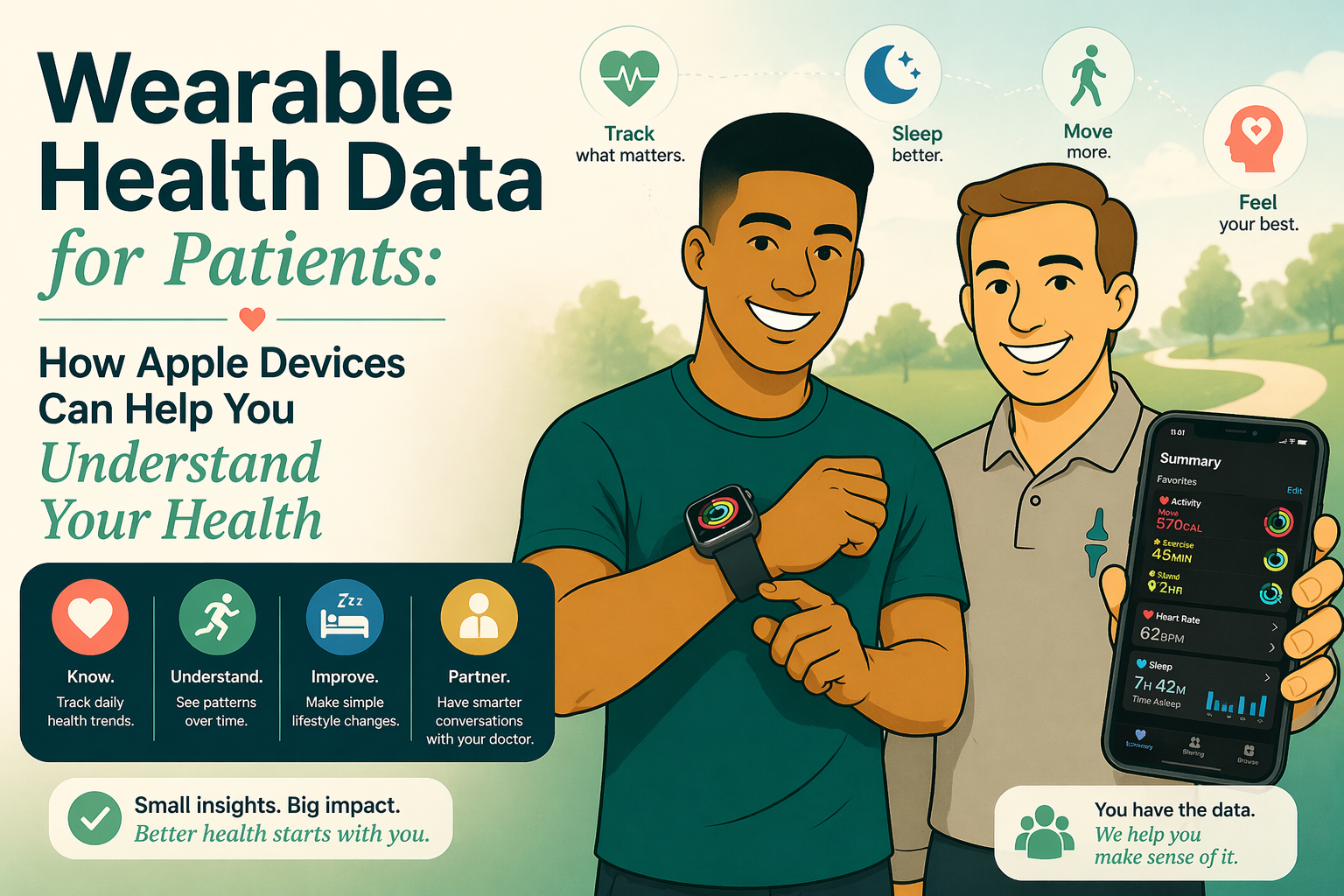
Healthcare is changing—and now some of the most useful health information may already be on your wrist.
Devices like the Apple Watch and iPhone can track your heart rate, sleep, steps, activity, oxygen levels, and more. That means you may notice changes in your health before they become bigger problems.
For patients, wearable technology can be empowering. It can help you understand patterns, stay motivated, ask smarter questions, and have more meaningful conversations with your physician, physical therapist, or care team.
These tools do not replace medical advice—but they can help you become a more informed and engaged partner in your care.
Apple Devices in Healthcare
Apple Watch
The Apple Watch is one of the most popular wearable devices because it can track:
Heart rate
Daily movement
Exercise minutes
Sleep
Oxygen saturation (on supported models)
Fall detection
Walking steadiness
Cardio fitness (VO2 max estimate)
ECG / irregular rhythm alerts (on supported models)
iPhone Health App
The Apple Health app stores your health information in one place so you can review trends over time.
Apple Health Dashboard
Instead of focusing on one random number, you can often learn more by seeing patterns over weeks or months.
Helpful Connected Apps
Apps that work with Apple devices may help track:
Nutrition
Weight changes
Rehab exercises
Hydration
Meditation
Blood pressure (with approved devices)
Glucose data (with compatible systems)
Important Health Metrics You May See
Heart & Cardiovascular Health
Resting Heart Rate
This is your heart rate when you are calm and resting.
Why it matters:
A sudden increase may happen with illness, stress, poor sleep, dehydration, or lower fitness.
Good question to ask your doctor:
“My resting heart rate has gone up lately. Is that something we should look into?”
Walking Heart Rate
This is how your heart responds during normal movement.
If it rises more than usual during simple activities, it may reflect lower conditioning or illness.
Heart Rate Variability (HRV)
This measures variation between heartbeats.
HRV is often linked with:
Stress
Recovery
Sleep quality
Training fatigue
Lower HRV is not always dangerous, but trends may be useful.
Recovery Heart Rate
How quickly your heart rate comes down after exercise.
Better recovery often reflects better conditioning.
Irregular Rhythm Alerts / ECG
Some Apple Watch models can notify you of possible rhythm irregularities.
This does not diagnose a condition—but it may be worth discussing with your physician.
Fitness & Movement
VO2 Max / Cardio Fitness
This estimates how efficiently your body uses oxygen during exercise.
Think of it as a marker of endurance and of your heart and lung fitness.
Low or declining values may reflect:
Deconditioning
Reduced activity
Weight gain
Cardiovascular concerns
Aging without exercise support
Steps Per Day
Simple, powerful, and useful.
Walking more consistently often supports:
Heart health
Weight management
Blood sugar control
Mood
Joint mobility
Walking Speed & Mobility
These can be surprisingly helpful markers of function and recovery.
If walking becomes slower or harder, it may be worth discussing with your doctor, physical therapist, or other provider.
Breathing & Oxygen
Respiratory Rate
Your breaths per minute during rest or sleep.
Changes may happen with:
Anxiety
Illness
Poor fitness
Lung issues
Oxygen Saturation (SpO2)
This estimates how much oxygen your blood is carrying.
Wearables are not perfect medical tools, but repeated low readings or symptoms deserve attention.
Sleep & Recovery
Sleep Duration
Many adults need more sleep than they get.
Poor sleep can affect:
Pain levels
Mood
Weight
Blood pressure
Recovery
Energy
Sleep Consistency
Going to bed and waking up around the same time often matters more than people realize.
Wake Frequency
Frequent waking may happen from:
Pain
Stress
Sleep apnea
Bathroom trips
Medication effects
Lifestyle & Wellness
Calories Burned
Helpful as a rough estimate—not exact science.
Weight Trends
Long-term patterns matter more than day-to-day fluctuations.
Hydration Tracking
Useful if you often forget to drink enough water or if you’re an athlete trying to stay hydrated.
Mindfulness / Stress Tools
Many people benefit from reminders to pause, breathe, and reset.
Fall Risk & Aging Metrics
Fall Detection
Especially helpful for older adults or people living alone.
Walking Steadiness
May detect balance or mobility decline earlier than expected.
For Patients: What to Talk to Your Physician or Physical Therapist About
Bring your device data as a conversation starter—not as a diagnosis.
Heart Health
“My resting heart rate has changed. Does that matter?”
“I got an irregular rhythm alert. What should I do next?”
“My exercise tolerance feels lower than before.”
Fitness & Weight
“My VO2 max keeps dropping. What might this mean? How can I improve it safely?”
“How many steps per day would be realistic for me?”
“What kind of exercise is safest with my condition?”
Sleep
“My watch shows poor sleep. Could this affect my blood pressure or pain?”
“Should I be evaluated for sleep apnea?”
Oxygen / Breathing
“My oxygen numbers seem low sometimes. Should I be concerned?”
“I get short of breath walking. What should we check?”
Recovery & Mobility
“My walking speed dropped. Is that expected with what I am dealing with?”
“How many steps should I aim for during recovery?”
“Can we use my Apple Watch data to track progress?”
Pain & Activity Balance
“How do I know if I’m doing too much or too little?”
“Can my recovery heart rate help guide exercise intensity?”
Fall Prevention
“My walking steadiness score changed. Can we work on balance?”
How Wearable Tech Can Help You Between Visits
Your device can help you notice patterns like:
More fatigue than usual
Rising resting heart rate
Less daily movement
Worse sleep
Slower recovery after exercise
Declining activity tolerance
These patterns may be worth discussing earlier rather than waiting months.
Important Limitations to Remember
Wearables Are Helpful—Not Perfect
These devices are smart, but not flawless.
Use them as guides, not final answers.
Numbers Need Context
One odd reading usually means less than a consistent trend.
Don’t Panic Over Alerts
Use alerts as prompts to check in with a healthcare professional.
Symptoms Matter Most
Chest pain, fainting, severe shortness of breath, weakness, or concerning symptoms should be medically evaluated regardless of what your watch says.
Best Ways to Use Your Apple Watch for Health
Keep It Simple
Track only a few things:
Daily steps
Resting heart rate
Sleep consistency
Exercise minutes
Recovery trends
Focus on Trends
Look at changes over time, not hourly numbers.
Use It for Motivation
Celebrate consistency more than perfection.
The Future of Patient Health Monitoring
Wearables are likely to become even more useful through:
Better sensors
Smarter alerts
Personalized recommendations
Easier sharing with healthcare teams
Improved prevention tools
Conclusion
Your Apple Watch is not your doctor—but it can help you become a smarter patient.
When used well, wearable data can help you notice patterns, ask better questions, stay motivated, and partner with your care team in a more meaningful way.
The best healthcare often happens when technology and human guidance work together.
This content drafted, researched, edited, and generated by:
McKinley Pollock, PT, DPT
McKinley Pollock, PT, DPT, OCS, CSCS is a physical therapist with a background in orthopedics and sports rehabilitation. Dr. Pollock earned his doctorate of physical therapy from Campbell University in 2021, is a board-certified orthopedic clinical specialist (OCS), and certified strength and conditioning specialist (CSCS). Dr. Pollock enjoys combining lessons learned from his DPT training and research, translating these into clinical practice. His passions include promoting relationships between patients & clinicians to promote clinical effectiveness, satisfaction, and efficiency, the implementation of primary preventative medicine into clinical practice, and leadership and education development.
© 2026 The Joint Connection Company. All rights reserved.
The content on this website, including all text, graphics, and materials, is the exclusive property of The Joint Connection Company and is protected by applicable copyright and intellectual property laws. No part of this site may be reproduced, distributed, or used without prior written permission.