

✨ Too Long Didn’t Read (TLDR) / Summary
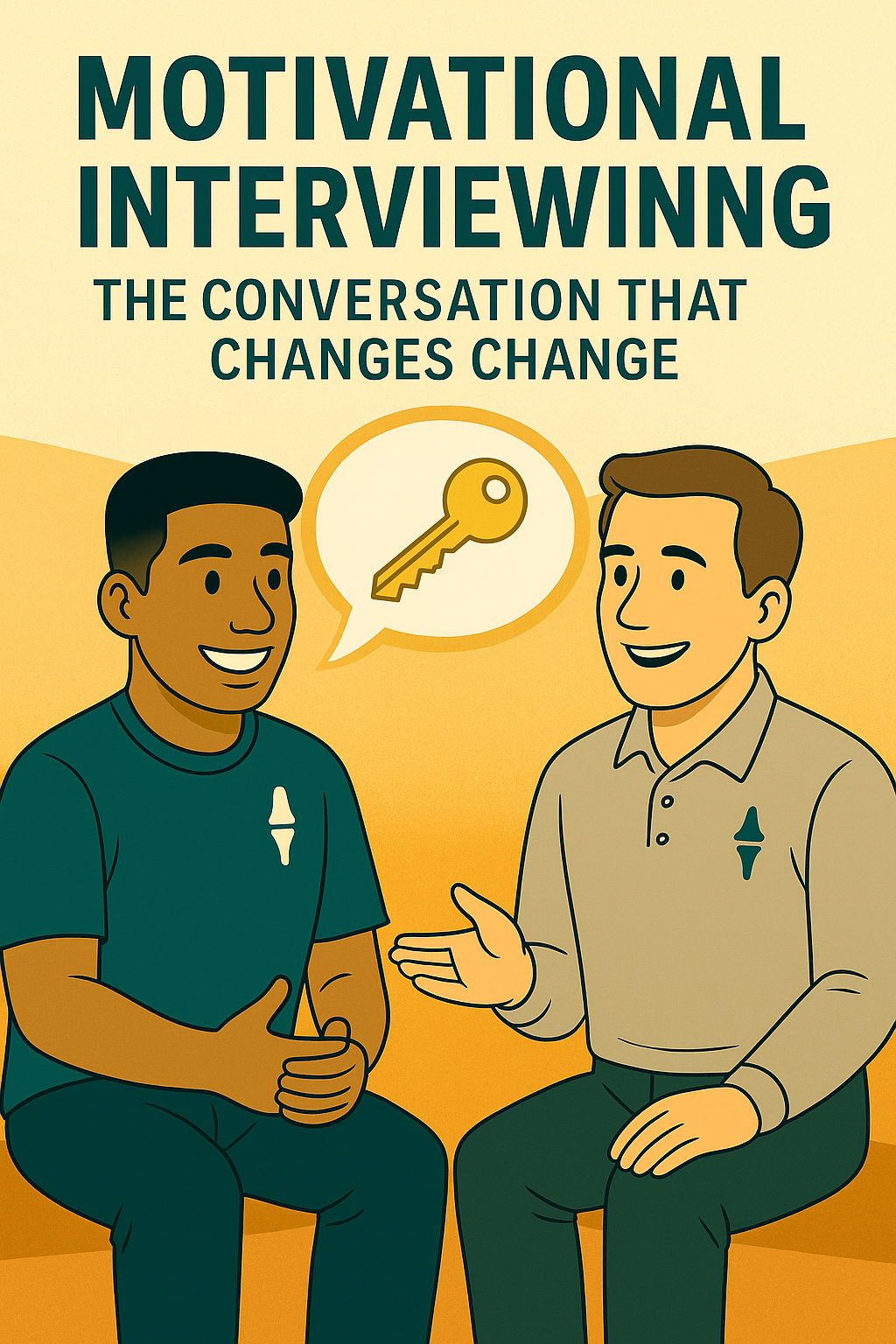
Motivational Interviewing is a compassionate, collaborative communication style designed to help people find their own reasons and confidence to make meaningful changes in their lives.
Rather than telling patients what to do, Motivational Interviewing helps them explore why they might want to change—and how they can get there.
For patients, it offers space to be heard and supported without pressure.
For clinicians, it provides a framework to strengthen motivation, enhance trust, and promote sustainable behavior change—especially when paired with other therapeutic interventions.
What Exactly Is Motivational Interviewing?
Motivational Interviewing is defined as:
“A collaborative, goal-oriented style of communication with particular attention to the language of change. It is designed to strengthen personal motivation for and commitment to a specific goal by eliciting and exploring the person’s own reasons for change within an atmosphere of acceptance and compassion.”
— Miller & Rollnick, 2013
In practice, Motivational Interviewing is not about convincing someone to change—it’s about helping them uncover their own motivation to do so. It sits between following (good listening) and directing (giving advice), making it a guiding style that empowers people rather than instructs them.
Motivational Interviewing emphasizes:
Partnership: Clinician and client work as equals.
Acceptance: Respecting the person’s autonomy and worth.
Evocation: Drawing out the person’s own reasons for change.
Compassion: Acting in the client’s best interest.
Research shows Motivational Interviewing can help people navigate ambivalence—the tug-of-war between wanting to change and wanting to stay the same. It’s particularly effective when motivation, confidence, or readiness are low.
For Providers: The Clinical Power of Partnership
Clinicians trained in Motivational Interviewing often describe it as a shift in mindset—from “I have to fix this” to “I want to understand this person’s perspective.”
That shift matters. Therapist empathy has been shown to strongly predict outcomes—sometimes even more than specific techniques. Motivational Interviewing turns empathy into a clinical skill by teaching clinicians to:
Listen for change talk—statements reflecting desire, ability, reasons, or need (D.A.R.N.).
Gently explore sustain talk or resistance without argument.
Strengthen a patient’s self-efficacy through reflection and affirmation.
Guide conversations through the four processes of Motivational Interviewing: engaging, focusing, evoking, and planning.
Studies consistently show that Motivational Interviewing enhances the effectiveness of other interventions. For instance, integrating Motivational Interviewing into physical therapy can boost exercise compliance and improve rehabilitation outcomes. Similarly, meta-analyses suggest that Motivational Interviewing can modestly increase physical activity levels and adherence to healthy behaviors, even in chronic conditions.
While Motivational Interviewing’s benefits may taper after the intervention period, it still offers a valuable communication framework that strengthens rapport, patient satisfaction, and long-term trust
For Patients: A Conversation That Puts You in the Driver’s Seat
Have you ever left a doctor’s appointment feeling like decisions were made for you instead of with you? Motivational Interviewing aims to change that.
In an Motivational Interview-style conversation, your healthcare provider won’t lecture, confront, or pressure you. Instead, they’ll ask open questions like:
“What concerns you most about your current health?”
“What would change look like if it felt manageable to you?”
“What makes this goal important to you right now?”
Through this approach, you can:
Clarify your goals and values.
Explore what’s holding you back.
Build confidence in your ability to change.
Feel heard and supported, not judged.
Even small improvements matter. For example, research has shown Motivational Interview-based approaches can help increase physical activity and reduce pain and functional limitations when combined with physical therapy.
How Patients Can Apply Motivational Interviewing Principles in the Clinic Themselves
Even if your clinician isn’t formally trained in Motivational Interviewing, you can bring the spirit of it into your own healthcare conversations. Try these approaches:
Use curiosity. Ask yourself, “What do I actually want to change—and why?”
Voice your ambivalence. It’s okay to say, “I want to be more active, but I’m afraid of the pain.” Naming mixed feelings helps you and your provider work through them together.
Ask open-ended questions. “What options do I have?” “How can I make this goal more realistic?”
Share what matters most. Let your provider know what motivates you—family, independence, comfort, or energy.
Celebrate progress. Motivational Interviewing is about movement, not perfection. Even small steps forward are worth acknowledging.
By practicing self-reflection and open dialogue, patients can take an active role in shaping their care—and clinicians can meet them where they are, with empathy and partnership.
References
Miller, W.R. & Moyers, T.B. (2017). Motivational Interviewing and the Clinical Science of Carl Rogers. Journal of Consulting and Clinical Psychology, 85(8), 757–766.
Miller, W.R. & Rollnick, S. (2013). Motivational Interviewing: Helping People to Change (3rd ed.). Guilford Press.
Miller, W.R. & Rollnick, S. (2009). Ten Things That MI Is Not. Behavioural and Cognitive Psychotherapy, 37, 129–140.
Miller, W.R. (2023). The Evolution of Motivational Interviewing. Behavioural and Cognitive Psychotherapy, 51(6), 616–632.
Zhu, S., Sinha, D., Kirk, M., et al. (2024). Effectiveness of Behavioural Interventions with Motivational Interviewing on Physical Activity Outcomes in Adults: Systematic Review and Meta-analysis. BMJ, 386:e078713.
Jamil, A., Javed, A., & Iqbal, M.A. (2021). Effects of Motivational Interviewing with Conventional Physical Therapy on Rehabilitation of Chronic Musculoskeletal Disorders: A Quasi-experimental Study. Journal of the Pakistan Medical Association, 71(4), 1123–1127.
O’Halloran, P.D., Blackstock, F., Shields, N., et al. (2014). Motivational Interviewing to Increase Physical Activity in People with Chronic Health Conditions: A Systematic Review and Meta-analysis. Clinical Rehabilitation, 28(12), 1159–1171.
MotivationalInterviewing.org. Definition and Overview of Motivational Interviewing.
This content drafted, researched, edited, and generated by:
McKinley Pollock, PT, DPT
McKinley Pollock, PT, DPT, OCS, CSCS is a physical therapist with a background in orthopedics and sports rehabilitation. Dr. Pollock earned his doctorate of physical therapy from Campbell University in 2021, is a board-certified orthopedic clinical specialist (OCS), and certified strength and conditioning specialist (CSCS). Dr. Pollock enjoys combining lessons learned from his DPT training and research, translating these into clinical practice. His passions include promoting relationships between patients & clinicians to promote clinical effectiveness, satisfaction, and efficiency, the implementation of primary preventative medicine into clinical practice, and leadership and education development.