

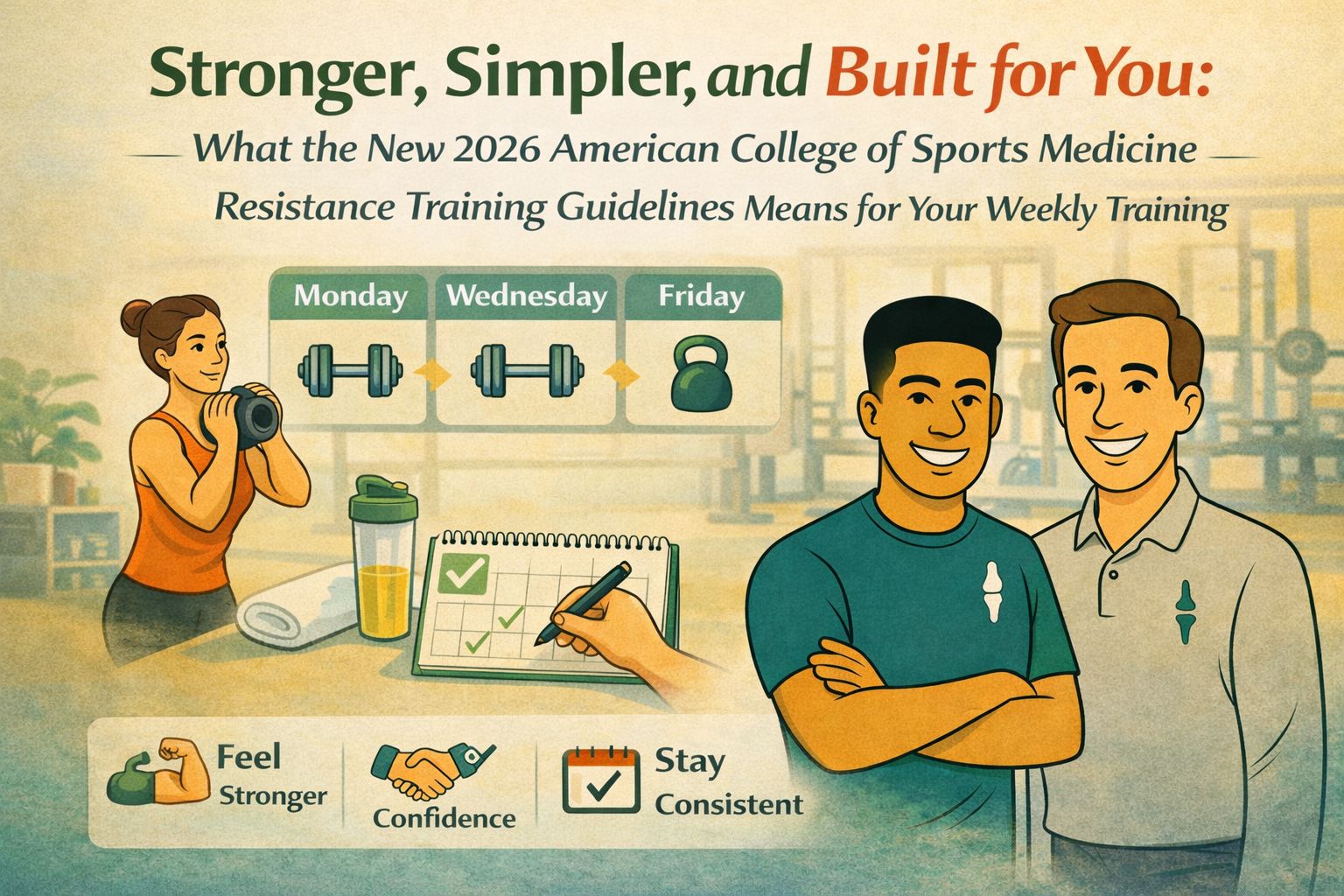
✨ Too Long Didn’t Read (TL;DR) / Summary
Resistance training (strength training) is one of the best things you can do for your health—for strength, mobility, balance, and long-term independence.
It doesn’t have to be complicated to work.
A simple starting point:
Aim for 2x per week
Do 2–3 sets of each exercise
Use a weight that feels challenging for you
You don’t need:
Fancy equipment
Perfect programs
To feel completely exhausted after every workout
The real secret:
👉 Consistency beats perfection.
Making Sense of Current Recommendations
🧠 Let’s Reframe Daily Exercise (In a Way That Actually Helps You)
You might think:
“What’s the best workout?”
“Am I doing this right?”
“Do I need the perfect plan?”
But the research says something different:
👉 The biggest barrier isn’t doing your exercises wrong
👉 It’s not doing your exercises at all
Why?
Fear of injury
Not knowing where to start
Feeling like you need a “perfect” routine
📊 What Actually Matters for YOU
Let’s break this down in plain language.
1. How Often Should I Do This?
Guidelines state that about 2 times per week is enough to see real benefits
👉 More is okay—but only if it fits your life.
💬 What this means for you:
Start small. Even twice a week can make a big difference!
2. How Heavy Should I Lift?
For strength, heavier weights help
But lighter weights still work—especially when starting out
👉 “Heavy” just means “challenging for you”
💬 What this means for you:
You should feel like:
“Okay… that was tough, but I could do a few more reps.”
3. How Much Should I Do?
Around 2–3 sets per exercise
Over time, doing more (like 10+ sets per week per muscle group) can help build muscle
💬 What this means for you:
You don’t need to do everything in one day—spread it out.
4. Do I Need Perfect Technique or Special Equipment?
Here’s what helps:
Moving through a full range of motion
Feeling in control of the movement
Here’s what doesn’t matter as much:
Machines vs free weights vs resistance bands
Time of day
Exact rest time
💬 What this means for you:
You can start with:
Bodyweight
Resistance bands
Machines
👉 It all counts.
5. Do I Need to Push Until I Can’t Move?
Nope.
Training until total exhaustion does NOT improve results
💬 What this means for you:
You don’t need to feel wiped out to make progress.
⚖️ The Most Important Takeaway
This is the big one:
👉 There is no single “perfect” program.
Many different approaches work.
So instead of asking:
“What’s the best workout?”
Try asking:
“What can I actually stick with consistently?”
💙 For Patients:
What to Talk About With Your Doctor or Physical Therapist
This is where things really come together.
While you don’t need to see a provider to use these guidelines, here are great questions to ask if you want more information:
🗣️ Getting Started
“Is strength training safe for me based on my health history?”
“What kind of exercises should I start with?”
🏋️♂️ Building Confidence
“What should ‘challenging’ feel like for me?”
“How do I know if I’m doing an exercise correctly?”
📅 Making It Work in Real Life
“How can I fit this into my weekly routine?”
“What’s a realistic starting point for me?”
⚠️ Safety & Progression
“What are signs I’m overdoing it?”
“When should I increase weight or difficulty?”
🤝 Staying Consistent
“What’s the simplest plan I can stick to?”
“How can we adjust this if I fall off track?”
💬 The goal of these conversations isn’t perfection.
It’s to help you feel:
Safe
Capable
Supported
🌿 A Final Thought
Strength training isn’t just about muscles.
It’s about:
Feeling stronger in your daily life
Moving with confidence
Trusting your body again
And maybe most importantly:
It’s about proving to yourself that you can do hard things—one step at a time.
📚 References (AMA Format)
Currier BS, D’Souza AC, Singh MAF, et al. American College of Sports Medicine position stand: resistance training prescription for muscle function, hypertrophy, and physical performance in healthy adults—an overview of reviews. Med Sci Sports Exerc. 2026;58(4):851-872. doi:10.1249/MSS.0000000000003897
This content drafted, researched, edited, and generated by:
McKinley Pollock, PT, DPT & Jackson Kojima, PT, DPT
McKinley Pollock, PT, DPT, OCS, CSCS is a physical therapist with a background in orthopedics and sports rehabilitation. Dr. Pollock earned his doctorate of physical therapy from Campbell University in 2021, is a board-certified orthopedic clinical specialist (OCS), and certified strength and conditioning specialist (CSCS). Dr. Pollock enjoys combining lessons learned from his DPT training and research, translating these into clinical practice. His passions include promoting relationships between patients & clinicians to promote clinical effectiveness, satisfaction, and efficiency, the implementation of primary preventative medicine into clinical practice, and leadership and education development.
Jackson Kojima, PT, DPT, OCS is a physical therapist with an extensive background in orthopedics, geriatrics, and sports rehabilitation. Dr. Kojima is a board-certified orthopedic clinical specialist (OCS) with a passion for post-operative rehabilitation and enjoys treating multi-factorial conditions like low back pain and generalized joint pain. Dr. Kojima earned his doctorate of physical therapy from Campbell University in 2021 and currently practices in Greenville, SC.
© 2026 The Joint Connection Company. All rights reserved.
The content on this website, including all text, graphics, and materials, is the exclusive property of The Joint Connection Company and is protected by applicable copyright and intellectual property laws. No part of this site may be reproduced, distributed, or used without prior written permission.