

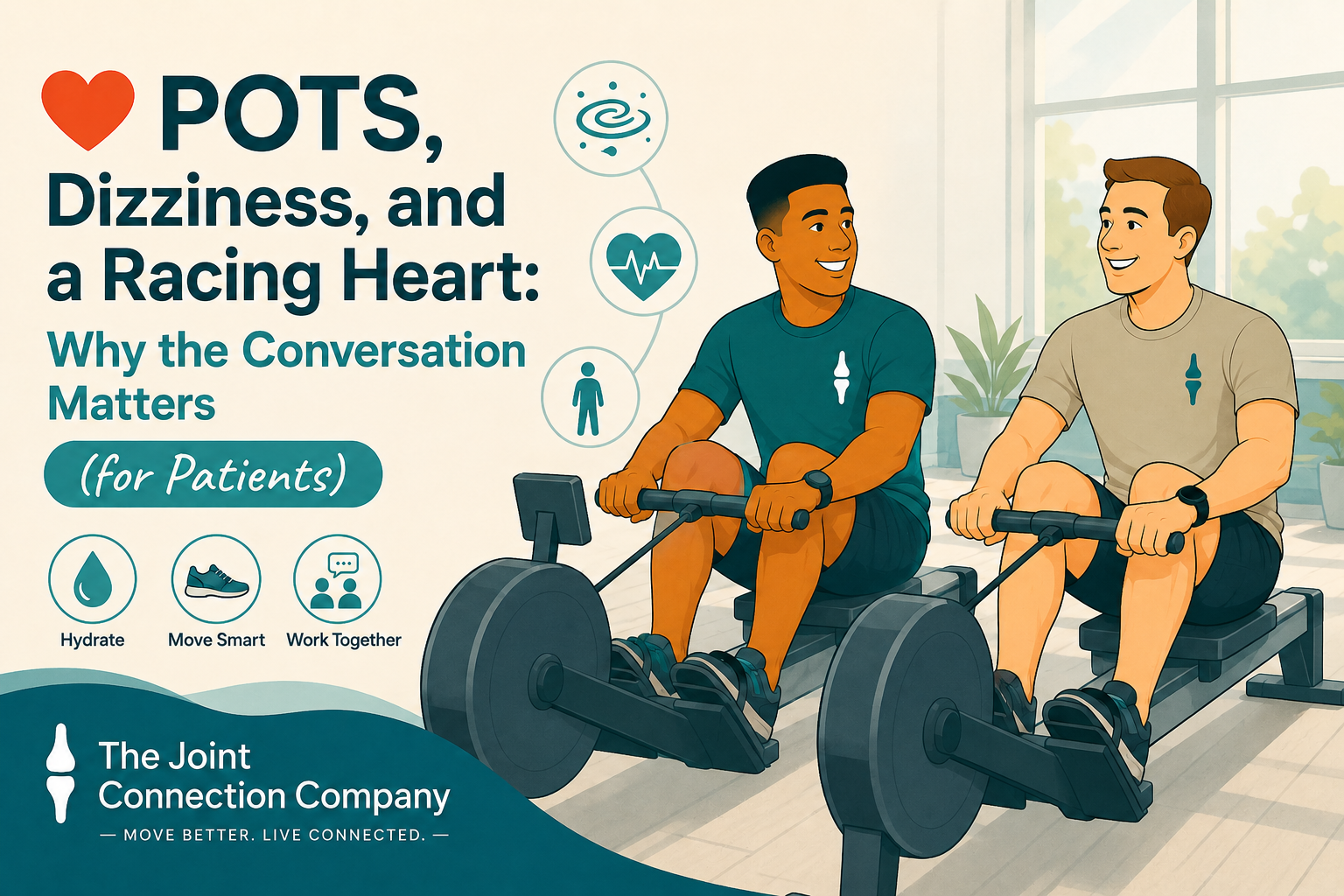
❤️ POTS, Dizziness, and a Racing Heart: Why the Conversation Matters (for Patients)
POTS stands for Postural Orthostatic Tachycardia Syndrome. It can cause symptoms like dizziness, racing heart, fatigue, brain fog, weakness, nausea, shakiness, and feeling worse when standing, showering, exercising, or being in the heat.
POTS is related to upright posture. Symptoms often show up or worsen when standing, walking, exercising upright, or waiting in line, and may improve when lying down.
Dizziness and a racing heart do not automatically mean POTS. Dehydration, anemia, thyroid issues, medication effects, heart rhythm problems, blood pressure changes, infection, deconditioning, and other conditions can look similar.
Hypermobility can be part of the conversation, but it is not the whole story. Some people have both POTS-like symptoms and hypermobility, but being hyper-flexible does not automatically mean you have POTS or Ehlers-Danlos syndrome.
You deserve a thoughtful evaluation. Your symptoms are real. A good healthcare team should help you understand what happens when you stand, whether your heart rate or blood pressure changes, what else should be ruled out, and what kind of movement or physical therapy may be safe for you.
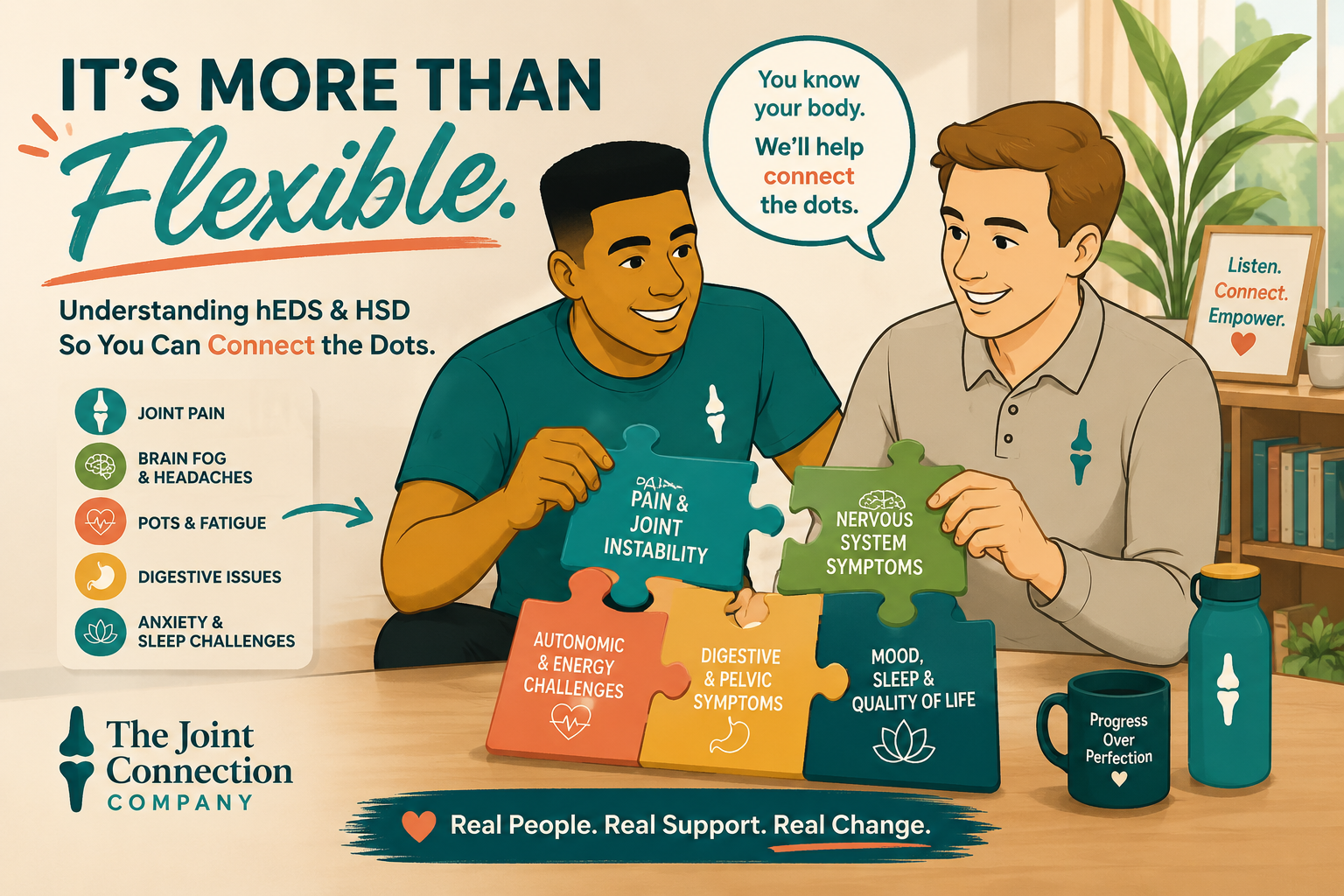
It’s More Than Flexible: A Patient’s Guide to Hypermobility, hEDS, HSD, and Pain
Hypermobility is not “just being flexible.”
For some people, flexible joints are painless and harmless. For others, hypermobility comes with pain, instability, fatigue, dizziness, digestive issues, anxiety, frequent injuries, or feeling like the body is hard to control.
Two common diagnoses are:
Hypermobile Ehlers-Danlos Syndrome (hEDS): a connective tissue condition diagnosed through clinical criteria. There is currently no single genetic test for hEDS.
Hypermobility Spectrum Disorder (HSD): symptomatic hypermobility that does not fully meet hEDS criteria but can still cause real pain, disability, and daily-life challenges.
The latest research supports care that is multidisciplinary, movement-based, patient-centered, and psychologically informed. In plain English: you need a team that listens, helps you move safely, teaches you how your body works, and supports your confidence—not just your joints.