

Get More From Every Minute: How to Make Short Appointments Count
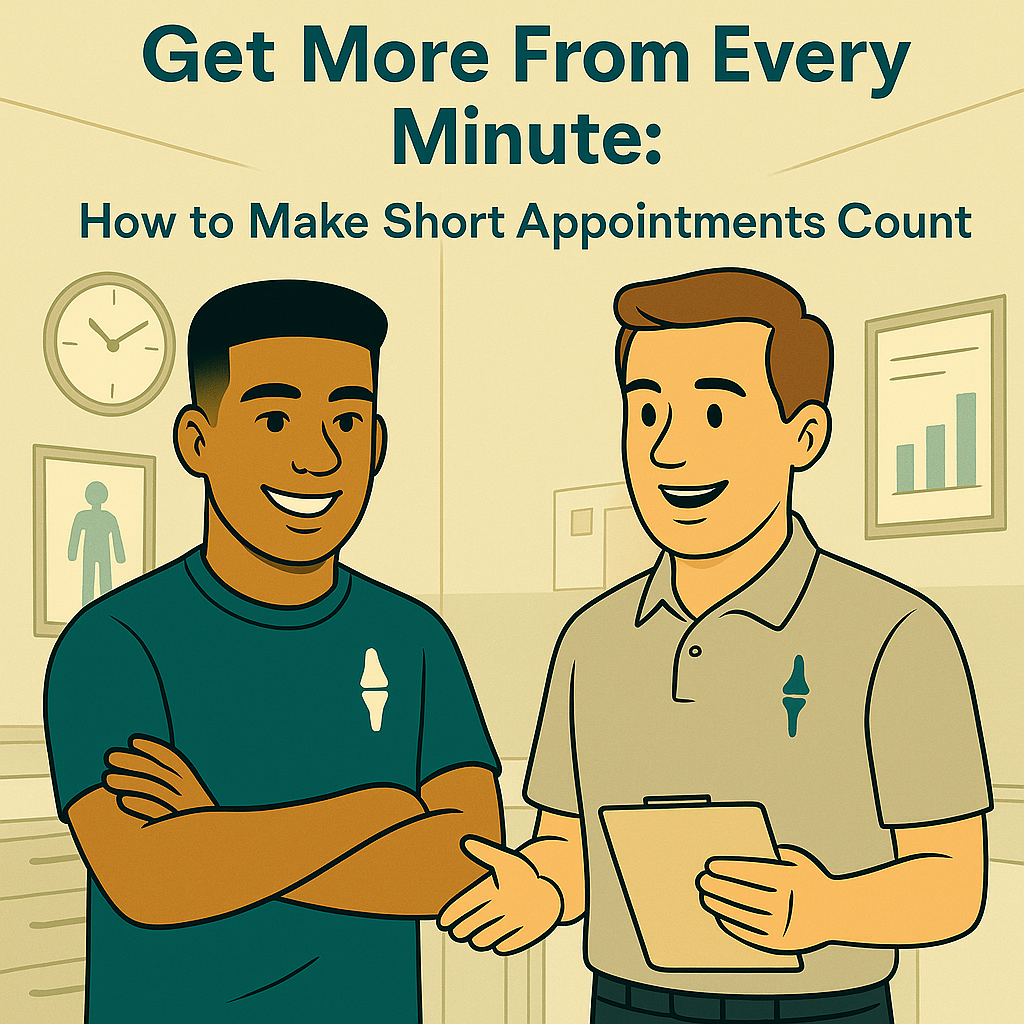
✨ Too Long Didn’t Read (TLDR) / Summary
Healthcare visits are shorter than ever — and that can feel frustrating for everyone involved. But with a little preparation and the right communication habits, those 15 minutes can become powerful, productive, and personal.
Patients: Come in prepared with your top concerns, organized info, and clear questions.
Providers: Use structure, empathy, and small cues to help patients feel heard — even on a tight schedule.
When both sides work together, time becomes less of an obstacle and more of a tool for better care.
Introduction
Let’s be honest: nobody likes feeling rushed in a doctor’s office. Patients spend days waiting for an appointment that sometimes lasts less time than their morning coffee break. Providers juggle packed schedules, endless charts, and the constant tick of the clock.
And yet — every once in a while — there’s that great visit: the one where everything clicks. You leave feeling understood, reassured, and like your health is in good hands.
What’s the secret? It’s not luck. It’s communication and preparation — on both sides of the exam table.
This post explores how patients and providers can turn short visits into meaningful ones that deliver clarity, trust, and next steps — without anyone feeling like they’re in a speed-dating session for healthcare.
🧾 For Patients: How to Prepare for Short Appointments
1. 🎯 Know Your Top Three
Before you even set foot in the office, decide your top three concerns for the visit. Write them down — yes, on paper or in your phone. This keeps your appointment focused and helps you leave feeling like your main needs were addressed.
Example: “1. My new chest tightness, 2. Refill on my blood pressure meds, 3. Questions about side effects.”
If something else comes up, that’s okay — but start with the most important issues first.
2. 💊 Bring the Evidence
No, not like a crime show — but your medication list, supplements, and any recent test results are gold.
Even better: take photos of the labels or bottles with your phone. It’s fast, accurate, and saves your clinician from deciphering handwriting that looks like a secret code.
3. 📝 Ask for a Recap
After your visit, politely ask:
“Could I get a printed or emailed summary?”
Most offices can do this easily. It helps you remember what was said, when to follow up, and how to take your medications. (Bonus: it prevents the “Wait, what did my doctor say?” moment two days later.)
4. ⏰ Arrive Early and Breathe
Running late means less face time. Arrive 10–15 minutes early so you can relax, fill out paperwork, and mentally focus. You’ll feel calmer — and calm brains listen and retain information better.
5. ❤️ Be Honest, Not Heroic
If something feels off, say so. You don’t have to tough it out or minimize symptoms. Clinicians want your real experience, not your “everything’s fine” face.
🩺 For Providers: How to Maximize Empathy and Efficiency
1. 🚪 Start Before You Enter
Before walking into the room, take one deep breath and set your intention:
“I have 15 minutes to make this person feel heard.”
That small mental pause can transform tone, body language, and focus.
2. 🙋♂️ Open with the Patient’s Agenda
Begin with:
“What’s most important for us to cover today?”
It’s a simple question, but it tells the patient, “This is your time.” Then, together, you can triage priorities and make sure the visit feels purposeful.
3. 🧩 Use “Micro-Empathy”
Even brief interactions can be warm and personal.
Make eye contact when you greet.
Nod as patients speak.
Reflect what you heard: “It sounds like your headaches have been getting worse.”
Tiny cues of understanding go a long way — and take seconds.
4. 💬 Teach-Back Saves Time Later
End with something like:
“Can you tell me in your own words what the plan is, just so I know I explained it clearly?”
It’s a gentle check that prevents confusion, follow-up calls, and mistakes — a win-win for both parties.
5. 🧠 Document Strategically
Typing while talking can feel robotic. If possible, make eye contact during key moments, then finish notes afterward. Even narrating your process (“I’m just adding that to your chart”) keeps patients engaged rather than feeling ignored.
💡 Conclusion
A short visit doesn’t have to mean a shallow one. When patients come prepared and providers stay present, those few minutes can deliver clarity, comfort, and connection.
Efficiency and empathy aren’t opposites — they’re teammates. The best care happens when both sides speak the same language: one of respect, curiosity, and understanding.
So whether you’re wearing the white coat or the hospital gown, remember — a little prep and a little heart go a long way.
📎 Supplemental, Downloadable Content
🧾 Downloadable “Prep Sheet” for Patients
Oh hi - thank you for reading! We hope you enjoyed and that you are able to take these tools with you to get the most out of your next healthcare appointment! Below are some “bloopers” that ChatGPT gave us when trying to have a caption for this blog post… They were too good not to share!
This content drafted, researched, edited, and generated by: McKinley Pollock, PT, DPT
McKinley Pollock, PT, DPT, OCS, CSCS is a physical therapist with a background in orthopedics and sports rehabilitation. Dr. Pollock earned his doctorate of physical therapy from Campbell University in 2021, is a board-certified orthopedic specialist (OCS), and certified strength and conditioning specialist (CSCS) who enjoys combining lessons learned from his DPT training and research, translating these into clinical practice. Dr. Pollock’s passions include promoting relationships between patients & clinicians to promote clinical effectiveness, satisfaction, and efficiency, the implementation of primary preventative medicine into clinical practice, and leadership and education development.